
The Life, Innovation, and Legacy of the Man Who Transformed Apple
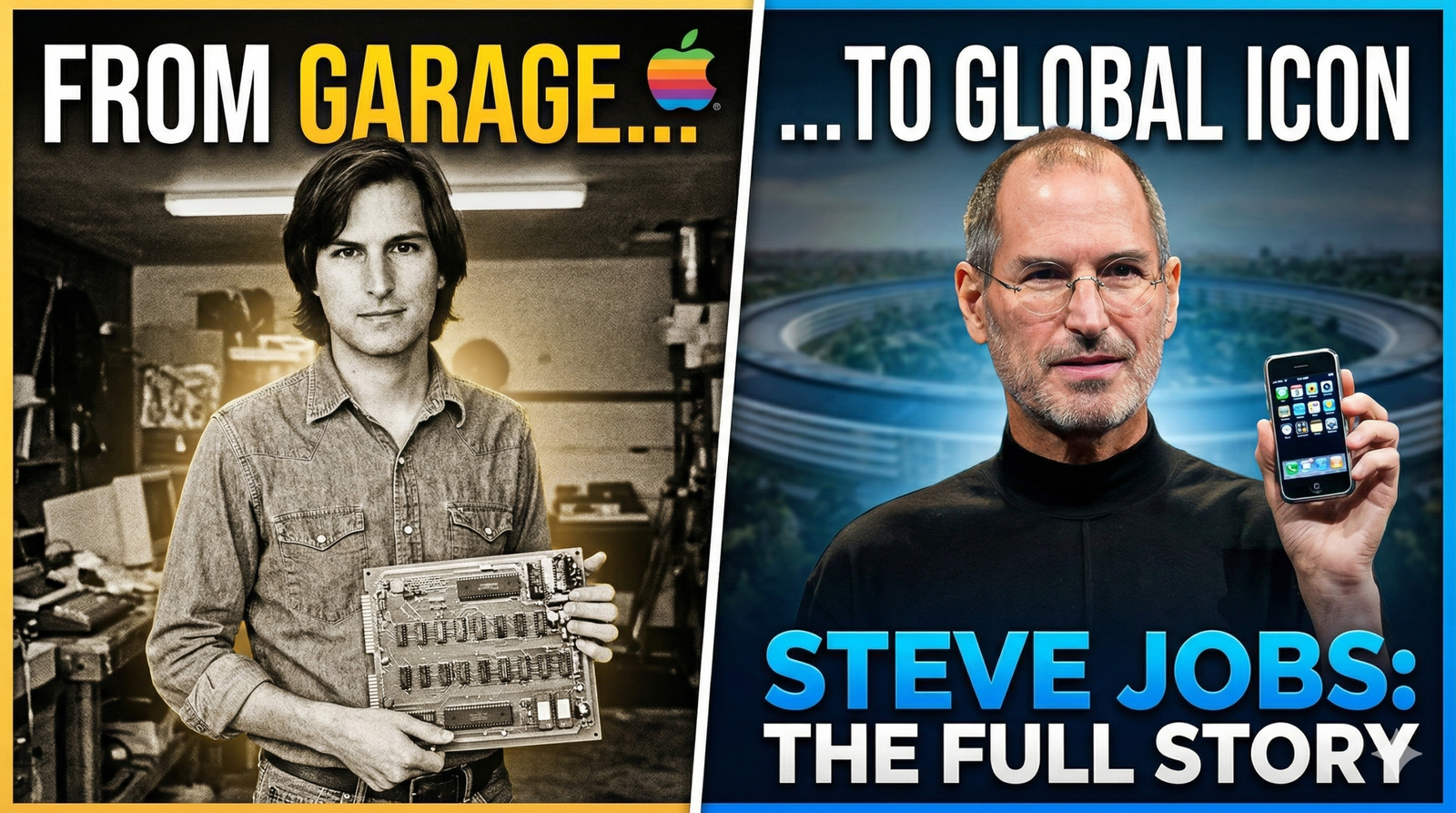
Steve Jobs (1955–2011) was more than a co-founder of Apple; he was a cultural icon whose obsession with design and functionality redefined the relationship between humans and machines. From a garage in Los Altos to the helm of the world’s most valuable company, Jobs’ life was a masterclass in resilience, innovation, and the power of “thinking different.”
Early Life and the Birth of Apple
Born in San Francisco and adopted by Paul and Clara Jobs, Steve grew up in the heart of what would become Silicon Valley. His interest in electronics was sparked by his father’s craftsmanship, but it was his partnership with Steve Wozniak that changed history.
In 1976, the duo founded Apple Computer in the Jobs family garage. While Wozniak was the technical genius, Jobs was the visionary. He saw a future where computers weren’t just for hobbyists or corporations, but for everyday people. This vision manifested in the Apple II, the first personal computer to achieve mass-market success, followed by the groundbreaking Macintosh in 1984, which introduced the graphical user interface (GUI) to the world.
Exile and the NeXT Chapter
Despite his brilliance, Jobs’ demanding personality and uncompromising nature led to a power struggle with Apple’s board of directors. In 1985, he was ousted from the company he started. Rather than retreating, Jobs embarked on his most creative period. He founded NeXT, a workstation company that would eventually provide the software foundation for the modern macOS.
Simultaneously, he acquired a struggling digital animation studio from Lucasfilm, renaming it Pixar. Under Jobs’ guidance and funding, Pixar released Toy Story in 1995—the first feature-length computer-animated film—forever changing the landscape of cinema and making Jobs a billionaire.
The Great Return and the “iRevolution”
In 1997, a struggling Apple purchased NeXT, bringing Jobs back as “interim” CEO. What followed was arguably the greatest turnaround in corporate history. Jobs streamlined Apple’s bloated product line and focused on high-design, high-impact devices that merged art with technology.
1998: The iMac proved that computers could be beautiful and user-friendly.
2001: The iPod and iTunes revolutionized the music industry, making 1,000 songs fit in a pocket.
2007: The iPhone reinvented the mobile phone, turning it into a pocket-sized computer and changing global communication.
2010: The iPad created a new category of “lean-back” computing, bridging the gap between phones and laptops.
Jobs didn’t just sell products; he sold experiences. His “Keynotes” became legendary theatrical events where he famously ended with “one more thing,” unveiling a product that would soon become a global necessity.
Legacy and Impact
Steve Jobs passed away on October 5, 2011, after a long battle with pancreatic cancer. His philosophy—that design is not just what it looks like, but how it works—continues to influence every corner of the tech industry.
He believed in the intersection of technology and the liberal arts, insisting that machines should be intuitive, elegant, and empowering. Today, his legacy lives on in the billions of devices that follow his design language and in a global culture of innovation that refuses to settle for the status quo. Steve Jobs didn’t just invent the future; he taught us how to live in it.